
“Every success taught me something. Every failure taught me more. those lessons are what people refer to as expertise.”
Matthew Ackerman
Founder, Predi Designs LLC

Newest Blog Post
Read our latest entry to our blog.

July 24, 2026
Layout Prevents Simple Ideas From Causing Confusion
Several people have seen the layout-troubled “Don’t Dead Open Inside” graffiti from The Walking Dead. Even if you have never watched the show, you have probably seen the meme at some point. It is one of those things that sticks because it feels so obviously wrong the second you read it. What makes it interesting is that the words themselves are not the problem. The message is clear when you finally reconfigure your mindset and wrap your head around it. The issue is the layout. The way the words are arranged causes your brain to read them in the wrong order, which turns a simple warning into something either confusing, offensive, or hilarious. That is what makes it such a useful example. It shows how quickly meaning can fall apart when visual structure does not match reading behavior.
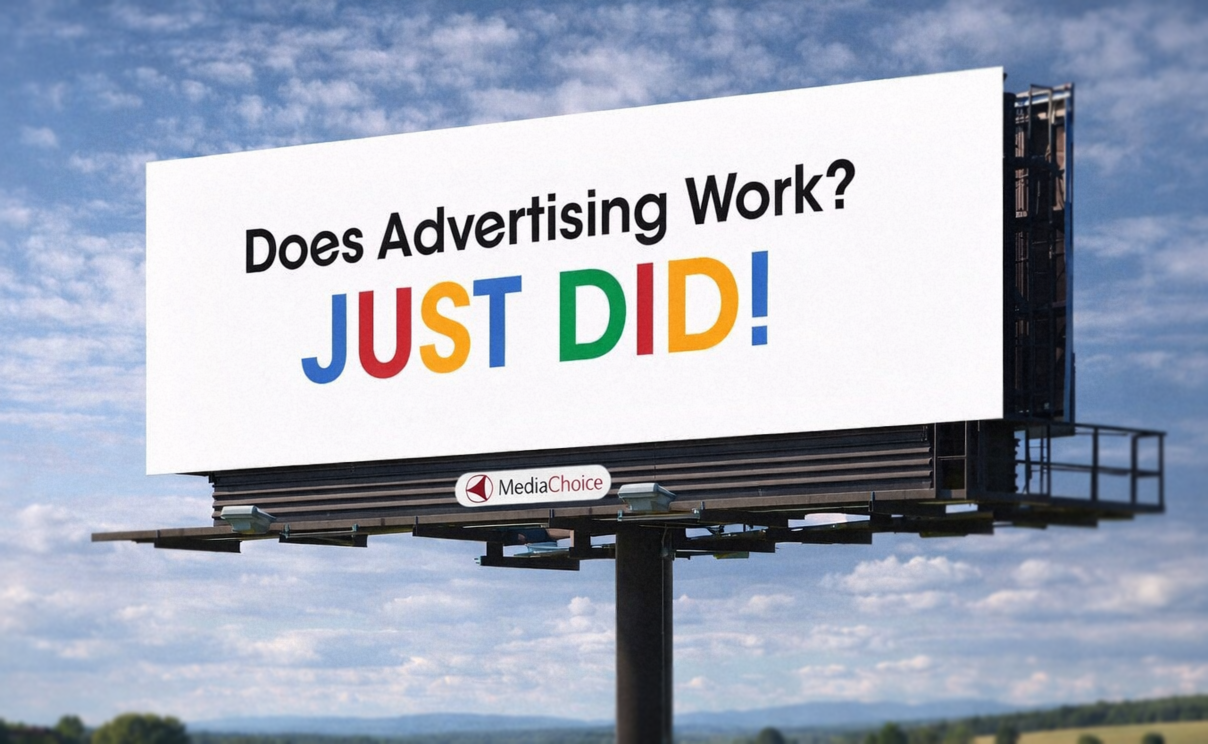 If you have driven anywhere over the past decade, you have probably seen this billboard. The one that says “Does Advertising Work? JUST DID!” It is everywhere, and more importantly, it sticks. You notice it, you remember it, and you might even bring it up later without realizing why. That alone puts it ahead of most billboards, which tend to disappear the second you pass them. What is interesting is how little it is actually doing. There is no product image, no long explanation, and no list of features. Just a question, an answer, and a phone number. That simplicity is doing a lot of work, and it is a good example of how strong ideas tend to carry more weight than layered design. Here is why it lands.
 I have a firm stance when it comes to work-life balance. No marketing project is ever urgent enough to treat someone’s personal life as secondary. That includes mine and it definitely includes the people I work with. Marketing matters, but it is not life and death. I have worked in environments where that line gets blurred. Where everything is labeled urgent, timelines are ignored until the last minute, and the pressure gets passed down to whoever is expected to clean it up. Over time, that kind of workflow does not just hurt the quality of the work, it wears people down. It creates a culture where being available matters more than being effective. That is not something I am interested in building or participating in.
 Rebrands always get attention, but not always for the right reasons. People notice when something familiar changes, especially when that brand has been part of their routine for years. There is a level of emotional attachment that builds over time, even with something as simple as a restaurant logo or packaging design. At the same time, staying the same forever is not an option either. An outdated brand identity makes a company feel behind, even if the product itself is still strong. The challenge is deciding what should evolve and what should stay recognizable. That balance is where most rebrands succeed or fall apart.
 For years, I have stumbled a little when someone asks what I do. The easy answer is “graphic designer”. It keeps the conversation moving. It is accurate, but only partially. “Owner” is technically correct too, but that tells you very little about my day to day. I even printed “graphic wizard” on my business cards. It makes people smile, which I still appreciate. It just does not fully answer the question. The hesitation comes from range. There is a wide scope of services, and they do not fit neatly into something I feel comfortable saying in one sentence. When I look at <a href="https://predi-designs.com/how-it-works/#services" target="_blank"> the Predi Designs services list</a>, I see websites, 3D animation, trade show booths, social campaigns, structured documents, presentation decks, and additional technical visuals. That collection works well together, but it does not sit cleanly under a single traditional label. So this post is not about finding something clever. It is about describing the work honestly. What am I actually doing for clients every month?
 Before we even touch sketches, fonts, or clever symbolism, it helps to admit one simple thing, logo work messes with people’s heads. It’s one of the few creative tasks where taste, ego, fear, and pride all show up to the meeting at the same time. Everyone wants a result that feels obvious, but the route to “obvious” is usually a pile of awkward drafts, second guesses, and sudden strong opinions from someone who has never cared about design until now. That emotional mix is why the process can feel slower, louder, and strangely personal compared to other projects. If you’ve ever wondered why a tiny graphic can spark a full-on committee debate, welcome, this is that part of the ride.
 AutoPay is basically our “keep it boring” button for billing. Your flat monthly rate drafts on the same day every month, you still get an invoice for your records, and nobody has to send the awkward overdue invoice emails. It keeps projects moving, keeps the relationship strong, and keeps your brain on design rather than due dates. Security is handled seriously, mistakes get fixed fast with a 100% guarantee, cancellation is simple, and we even apply a convenience discount as a small thanks for making the whole thing run smoothly.