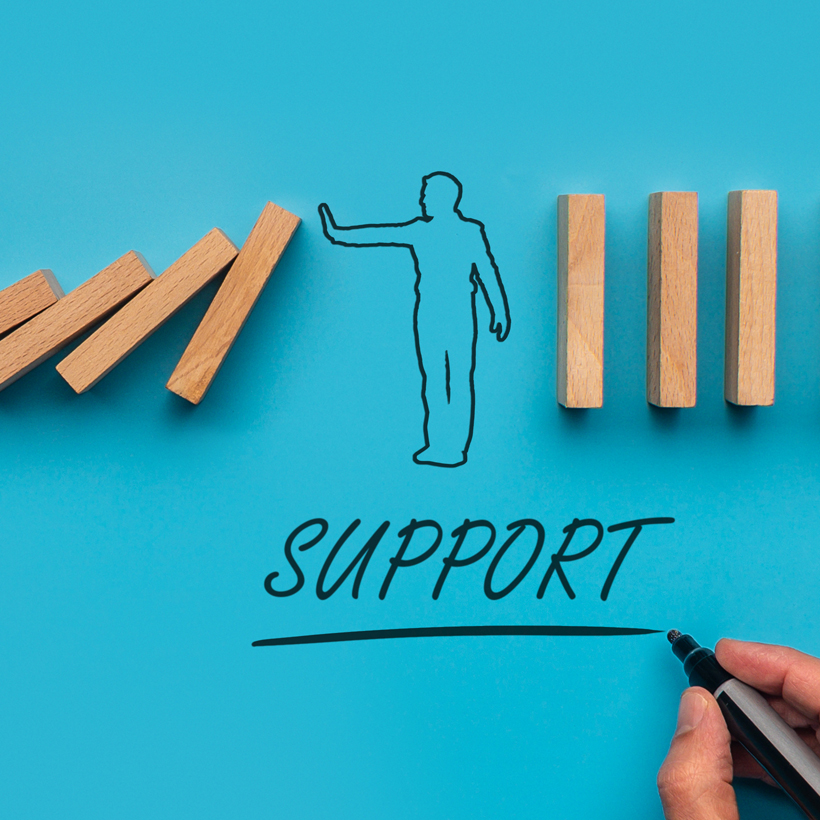
Predi’s Triage-Free Marketing
One belief has guided how I work for years, long before Predi Designs ever existed. Rarely is a marketing project truly urgent enough to ruin a weekend. Marketing matters, but it is not life or death. If a project cannot survive even the shortest of turnaround times, something upstream has already gone very wrong. Over time, that belief became more than a personal preference. It shaped how I structure client relationships, how I set boundaries, and how Predi Designs operates as a subscription partner. I have seen what happens when teams live in constant emergency mode, and it is not sustainable. It burns out good people and produces rushed work that rarely performs well, and has the potential to hurt the brand with overlooked mistakes and rash decisions. The goal has never been to work less. The goal has always been to work better. That philosophy shows up in every subscription we run.
about
We’re a high-quality, all-inclusive graphic design subscription for brands and businesses.
If a project is built with stress and urgency, the final product is rarely worth publishing. Designers need the time to experiment, relax, and confidently hand you something both of you can be proud of.
Urgency is often a planning problem
Why Marketing Is Not an Emergency
Marketing is important. It supports sales, reinforces credibility, and helps companies tell their story clearly. However, a great product paired with a capable salesperson can close a deal without a perfectly polished deck. Sales materials should support the conversation, not act as a last minute lifeline. When marketing becomes a constant fire drill, it usually points to a breakdown in planning and a hyper-fixation on minutia rather than a real emergency.
I have worked with teams where sales meetings were scheduled weeks in advance, yet marketing only received final content hours before a print deadline. The expectation was always the same. Cancel plans. Work late. Figure it out. That cycle conditions teams to believe urgency is normal, even when it is completely avoidable. Over time, it creates resentment and exhaustion on the marketing side while teaching sales teams that don’t deal with these stresses that procrastination has no consequences. None of that produces better work or stronger results.
Why power dynamics matter
The Contractor Boundary Advantage
One of the greatest benefits of operating as a contractor is the ability to set boundaries without fear. If a client decides to discontinue our relationship, it represents a small portion of my overall business.
For full time employees, pushing back can mean losing their entire income. That imbalance is why so many marketing professionals feel trapped into apologizing for problems they did not create. They carry stress that does not belong to them simply because saying no feels unsafe. It’s an environment in which they feel both powerless and have the weight of everyone on their shoulders, simultaneously.
As a contractor, I can set boundaries that the full-time employees who feel powerless cannot. When deadlines are always tight and every project is always on fire, they need someone who can tell their superiors "enough is enough."
I saw this firsthand with a marketing team that was repeatedly forced into late night work because sales decisions were constantly delayed until crunch time. My main contact was always apologetic. He knew the requests were too tight a turnaround, but he did not have the leverage to push back. When I declined a last minute Friday evening request due to existing travel plans, the sales team had no external safety net to lean on. I did not compromise and stood my ground. The result was uncomfortable, but necessary.
The sales presentation did not suffer. The small inconsequential tweaks being asked for an otherwise perfectly fine document did not make or break the deal. After that moment, expectations changed. The sales team gained respect for the time and effort required to do the work properly. Deadlines suddenly became reasonable. Materials were prepared earlier. The boundaries I set allowed the marketing team to stand their ground as well, without taking the blame.
Consistency beats constant urgency
How This Shapes the Predi Subscription
This philosophy is baked into how Predi Designs operates. The subscription model is built around steady progress, clear priorities, and predictable timelines. Requests are handled within a structured workflow that respects normal working hours. Emergencies are rare because most needs are anticipated early. Clients get better work because designers are not scrambling under artificial pressure. Teams get peace of mind knowing support is reliable without being intrusive.
By removing hourly billing and panic driven timelines, subscriptions encourage smarter planning. Clients learn to think ahead because they know design support is consistently available. That creates healthier collaboration and better outcomes across the board. This approach aligns with modern thinking around sustainable work culture and productivity, something platforms like Harvard Business Review have explored in depth.
At the end of the day, no brochure, deck, or campaign is worth burning people out. Respecting time is not a luxury. It is a prerequisite for good work. When boundaries are clear, trust grows. When trust grows, the work improves. That balance is not accidental. It is designed.
If a project is built with stress and urgency, the final product is rarely worth publishing. Designers need the time to experiment, relax, and confidently hand you something both of you can be proud of.
Urgency is often a planning problem
Why Marketing Is Not an Emergency
Marketing is important. It supports sales, reinforces credibility, and helps companies tell their story clearly. However, a great product paired with a capable salesperson can close a deal without a perfectly polished deck. Sales materials should support the conversation, not act as a last minute lifeline. When marketing becomes a constant fire drill, it usually points to a breakdown in planning and a hyper-fixation on minutia rather than a real emergency.
I have worked with teams where sales meetings were scheduled weeks in advance, yet marketing only received final content hours before a print deadline. The expectation was always the same. Cancel plans. Work late. Figure it out. That cycle conditions teams to believe urgency is normal, even when it is completely avoidable. Over time, it creates resentment and exhaustion on the marketing side while teaching sales teams that don’t deal with these stresses that procrastination has no consequences. None of that produces better work or stronger results.
As a contractor, I can set boundaries that the full-time employees who feel powerless cannot. When deadlines are always tight and every project is always on fire, they need someone who can tell their superiors "enough is enough."
Why power dynamics matter
The Contractor Boundary Advantage
One of the greatest benefits of operating as a contractor is the ability to set boundaries without fear. If a client decides to discontinue our relationship, it represents a small portion of my overall business.
For full time employees, pushing back can mean losing their entire income. That imbalance is why so many marketing professionals feel trapped into apologizing for problems they did not create. They carry stress that does not belong to them simply because saying no feels unsafe. It’s an environment in which they feel both powerless and have the weight of everyone on their shoulders, simultaneously.
I saw this firsthand with a marketing team that was repeatedly forced into late night work because sales decisions were constantly delayed until crunch time. My main contact was always apologetic. He knew the requests were too tight a turnaround, but he did not have the leverage to push back. When I declined a last minute Friday evening request due to existing travel plans, the sales team had no external safety net to lean on. I did not compromise and stood my ground. The result was uncomfortable, but necessary.
The sales presentation did not suffer. The small inconsequential tweaks being asked for an otherwise perfectly fine document did not make or break the deal. After that moment, expectations changed. The sales team gained respect for the time and effort required to do the work properly. Deadlines suddenly became reasonable. Materials were prepared earlier. The boundaries I set allowed the marketing team to stand their ground as well, without taking the blame.
Consistency beats constant urgency
How This Shapes the Predi Subscription
This philosophy is baked into how Predi Designs operates. The subscription model is built around steady progress, clear priorities, and predictable timelines. Requests are handled within a structured workflow that respects normal working hours. Emergencies are rare because most needs are anticipated early. Clients get better work because designers are not scrambling under artificial pressure. Teams get peace of mind knowing support is reliable without being intrusive.
By removing hourly billing and panic driven timelines, subscriptions encourage smarter planning. Clients learn to think ahead because they know design support is consistently available. That creates healthier collaboration and better outcomes across the board. This approach aligns with modern thinking around sustainable work culture and productivity, something platforms like Harvard Business Review have explored in depth.
At the end of the day, no brochure, deck, or campaign is worth burning people out. Respecting time is not a luxury. It is a prerequisite for good work. When boundaries are clear, trust grows. When trust grows, the work improves. That balance is not accidental. It is designed.

Matthew A.
Owner of Predi Designs
Matthew began as an online content creator in his teenage years, crafting Flash animations and games for internet audiences and collaborating with other young creatives worldwide. He later graduated cum laude from Texas A&M University’s Visualization Program, where he honed his skills in design, animation, and interactive media. He has owned and operated Predi Designs since 2016.
A Subscription Just Makes Sense.
Predi Designs delivers unlimited high-quality graphic design for a flat monthly rate, making top-tier branding and marketing more affordable, flexible, and efficient than traditional agencies. Plus, without salaries, benefits, or equipment costs, it’s more cost-effective than hiring in-house. No hourly fees, no scope limits. Just fast, reliable design on demand. Scale smarter, save more, and streamline creativity with Predi Designs.
blog tags
related posts
 Predi Designs began with a lean idea, an agency where I could handle a wide range of projects, build strong client relationships, and keep the work efficient. For a long time, that approach worked. I started young. As a teenager, I spent free time animating cartoons for the internet and making Flash games for people to play. I loved it, and I loved collaborating with other talented kids around the world. Animation needed voice actors. Games needed programmers. We found each other in forums and chat groups, working together because we wanted to, without contracts or deadlines.
 When people talk about branding, they usually point to the most visible piece. The ad, the logo, the booth, the hero graphic. That is the part everyone sees first, so it gets most of the credit. What matters more is what happens beyond those visuals. The structure that keeps everything consistent across dozens of touchpoints, over time, without falling apart. The companies that get this right are not relying on one standout moment. They are building something repeatable. Something that works whether you are looking at a website, opening a shrink-wrapped box, or walking past a booth. That level of consistency rarely comes from one person or one team working in isolation. It is usually a couple of marketing teams with their external partners working together toward the same system. That collaboration is what allows the brand to scale without losing itself.
 Before we even touch sketches, fonts, or clever symbolism, it helps to admit one simple thing, logo work messes with people’s heads. It’s one of the few creative tasks where taste, ego, fear, and pride all show up to the meeting at the same time. Everyone wants a result that feels obvious, but the route to “obvious” is usually a pile of awkward drafts, second guesses, and sudden strong opinions from someone who has never cared about design until now. That emotional mix is why the process can feel slower, louder, and strangely personal compared to other projects. If you’ve ever wondered why a tiny graphic can spark a full-on committee debate, welcome, this is that part of the ride.