
 Artificial intelligence changed more than the tools. It changed how people look at creative work. A polished composite, a surreal product image, or a heavily manipulated photo now gets a different reaction than it would have a few years ago. People see something impressive and immediately wonder if it was generated, even when the work was created long before ChatGPT was publicly released in November 2022. OpenAI’s original ChatGPT announcement is a useful timestamp for how recent this shift really is.
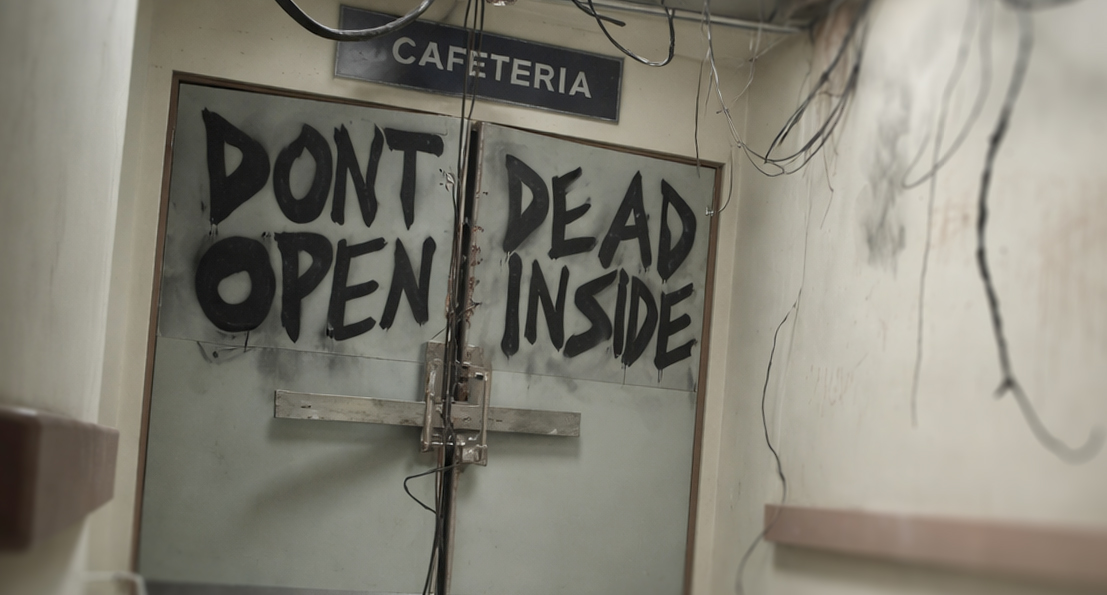 Several people have seen the layout-troubled “Don’t Dead Open Inside” graffiti from The Walking Dead. Even if you have never watched the show, you have probably seen the meme at some point. It is one of those things that sticks because it feels so obviously wrong the second you read it. What makes it interesting is that the words themselves are not the problem. The message is clear when you finally reconfigure your mindset and wrap your head around it. The issue is the layout. The way the words are arranged causes your brain to read them in the wrong order, which turns a simple warning into something either confusing, offensive, or hilarious. That is what makes it such a useful example. It shows how quickly meaning can fall apart when visual structure does not match reading behavior.
 Artificial intelligence is one of those technologies I cannot afford to ignore as a business owner. ChatGPT and Claude have already changed how people write, brainstorm, organize information, and generate visuals. ChatGPT launched publicly in November 2022, and the creative industry has been adjusting ever since. That creates an obvious question for Predi Designs. Should we use AI? The honest answer is yes, carefully. Ignoring the tool completely would be stubborn. Relying on it too heavily would be irresponsible. The goal is to understand where it helps, where it creates problems, and where a human designer still needs to be the one making the final call.
 Before we even touch sketches, fonts, or clever symbolism, it helps to admit one simple thing, logo work messes with people’s heads. It’s one of the few creative tasks where taste, ego, fear, and pride all show up to the meeting at the same time. Everyone wants a result that feels obvious, but the route to “obvious” is usually a pile of awkward drafts, second guesses, and sudden strong opinions from someone who has never cared about design until now. That emotional mix is why the process can feel slower, louder, and strangely personal compared to other projects. If you’ve ever wondered why a tiny graphic can spark a full-on committee debate, welcome, this is that part of the ride.
Latest Blog Entry
 Artificial intelligence changed more than the tools. It changed how people look at creative work. A polished composite, a surreal product image, or a heavily manipulated photo now gets a different reaction than it would have a few years ago. People see something impressive and immediately wonder if it was generated, even when the work was created long before ChatGPT was publicly released in November 2022. OpenAI’s original ChatGPT announcement is a useful timestamp for how recent this shift really is.
© 2016 - 2026 • Predi Designs, LLC • All Rights Reserved • Privacy Policy