AI Didn’t Replace My Eye
Artificial intelligence changed more than the tools. It changed how people look at creative work. A polished composite, a surreal product image, or a heavily manipulated photo now gets a different reaction than it would have a few years ago. People see something impressive and immediately wonder if it was generated, even when the work was created long before ChatGPT was publicly released in November 2022. OpenAI’s original ChatGPT announcement is a useful timestamp for how recent this shift really is.
That part is strange as a designer. A lot of the work I did before AI became mainstream could now be mistaken for AI. Product mockups, impossible environments, photo composites, background replacements, lighting adjustments, object removal, and all the other Photoshop work that makes people say, “How did you do that?” The public has a new explanation for it now, one that undermines actual effort.
I understand why that happens. AI tools made certain types of visual output feel instant. You can type a sentence and get something that looks finished enough to impress someone scrolling quickly. But there is a big difference between something that looks impressive for two seconds and something that can survive real review. That difference is where trained eyes still matter.
about
We’re a high-quality, all-inclusive graphic design subscription for brands and businesses.
The tools I've been using for two decades became both extremely useful and obsolete simultaneously almost overnight. AI can create similar visuals to this, but their failed precision simply can't match it. I've begun positioning myself for clientele who care enough to know the difference.
Old Man Yells At Clouds
I Made “AI-Looking” Work Before It Was Cool
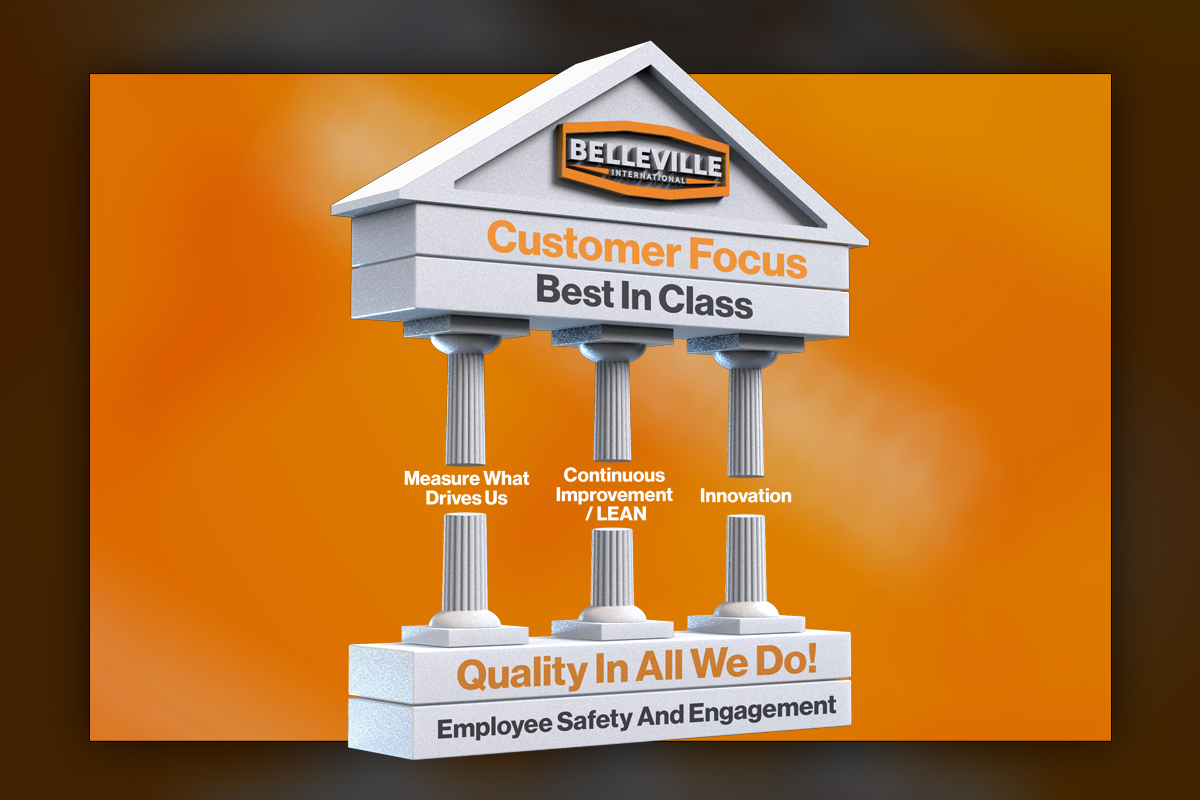
Before generative AI became part of every creative conversation, designers were already building images that did not exist in reality. Photoshop artists were combining separate photographs, changing environments, extending backgrounds, removing unwanted details, recoloring products, and creating compositions that felt believable even though they were carefully assembled piece by piece. 3D designers were doing the same thing from another angle, building product renders and environments that looked photographic but were entirely constructed.
A lot of my own work fits into that category. Product mockups are one of my stronger skill sets, especially when the goal is to make something look real enough to use in professional marketing. That might mean rendering a product in 3D, placing it in a clean environment, adjusting lighting, matching perspective, and building a final image that supports the brand without calling attention to itself. When it works, people do not notice the construction. They just accept the image.
That is also why it can feel odd when those skills get flattened into “AI could do that now.” AI can create something similar in seconds, but similar is doing a lot of work in that sentence. It may get the mood, the general composition, or the surface-level idea. It does not always understand the product, the industry, the lighting logic, the physical constraints, or the brand’s standards.
But professional design isn’t just about producing an image, it has to be the right image. Something accurate enough, controlled enough, and appropriate enough to publish. AI can create output. Non-modifiable output. Always only slightly-erroneous output. A designer decides whether that output actually works and sometimes we even are tasked with salvaging it.
Look For The Signs
An Eye For Detail
AI visuals often get the vibe right and the details wrong. That is the pattern I see most often. At a glance, the image may feel impressive. The colors look nice. The lighting feels dramatic. The composition has enough polish to pass the first scroll test. Then you look closer and the problems start showing up.
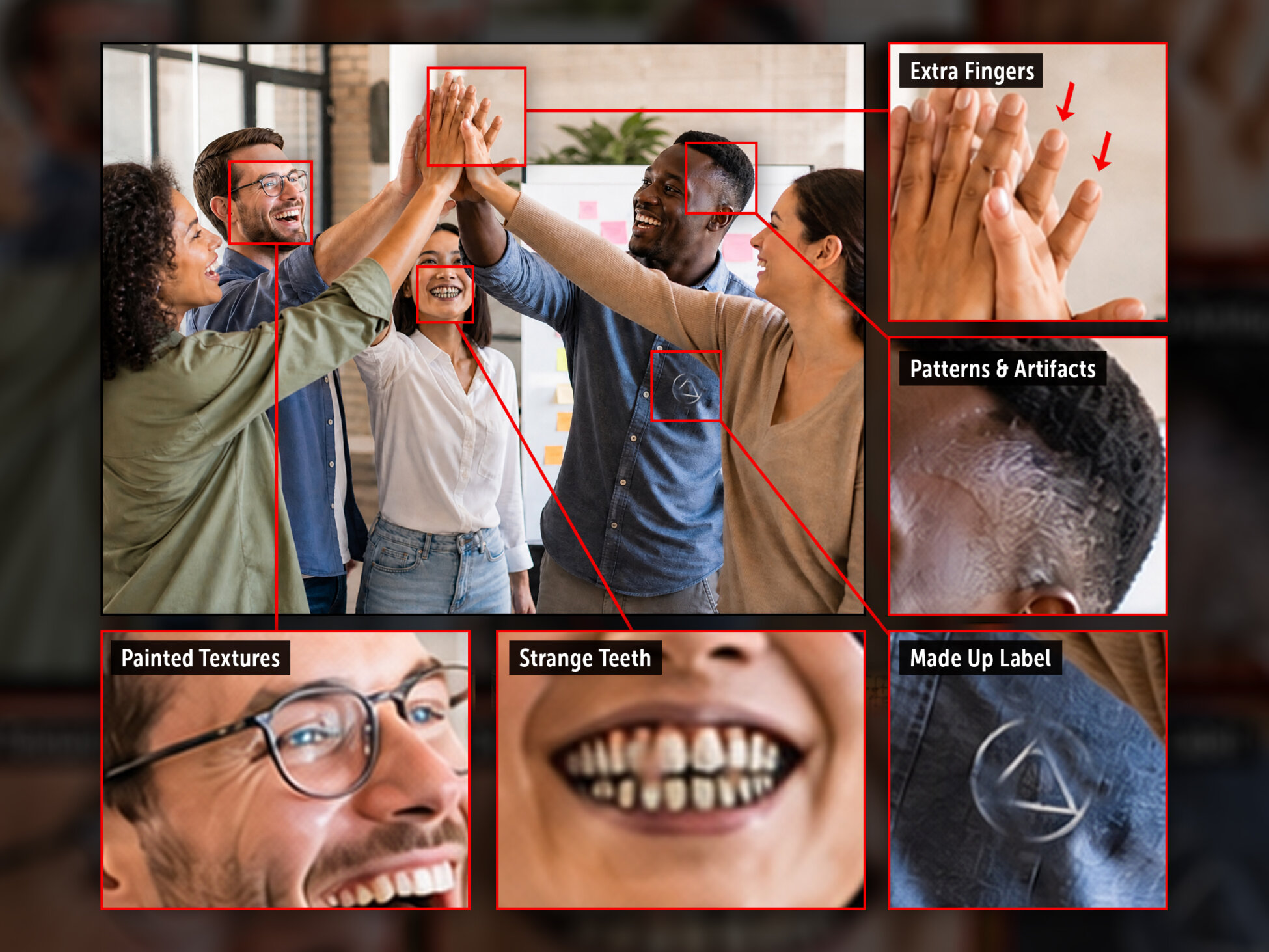
Sometimes the issues are obvious. Extra fingers, warped hands, broken text, weird artifacts, strange eyes, inconsistent shadows, objects melting into each other. Other times they are more specific to the industry. A product has the wrong internal structure. A piece of equipment is shaped in a way that would never function. A cutaway diagram shows components that make no mechanical sense. The image looks confident, but confidence is not the same as accuracy.
In a world where AI visuals are becoming more common, it's become a skill to suss out misinformation by looking for common signs of AI generated pictures. I'm sure, with time, these kinds of artifacts will get harder to spot.
That second category is where AI becomes especially risky for business marketing. A general audience may not notice the problem, but the right audience will. And that “right audience” is often the exact group the company is trying to impress. Engineers, buyers, field teams, technical decision-makers, and industry veterans can spot nonsense quickly. If the visual is wrong, the brand takes the hit.
This is why I still treat AI images cautiously. Not because they are always useless, but because they need review from someone who knows what they are looking at. An advertisement for a watch, strapped to a wrist-less 7-fingered hand can create quite the brand blunder. A technically inaccurate product visual can make a company look like it does not understand what it sells. That is a much bigger problem.
AI generated work is simply an amalgamation of content it has obtained from the internet. It can't actually create. A creative can work from a blank canvas, an idea, and put forth something that has never existed before that point.
My Workflow Is Changing For AI
We've Got It Backwards
AI has changed my workflow in ways I cannot really ignore. It can help organize thoughts, generate rough angles, clean up text, summarize messy information, and get past the blank page. I use it where it makes sense. Pretending it has no value would be silly. A growing share of American workers say at least some of their work is now done with AI, according to Pew Research Center, so this is not some niche creative industry issue anymore.
But AI has also created new kinds of work. I have been sent clearly AI-generated images and asked to fix them. Remove the strange artifacts. Repair the broken text. Make the hand normal. Clean up the impossible object. Sometimes that is easy enough. Other times, the foundation is so flawed that fixing it takes longer than rebuilding the idea properly.
There is also a new expectation problem. Clients who use AI regularly sometimes expect human creative work to move at the same speed. They see an image appear in seconds and assume the rest of the process should be just as fast. I already work quickly, but professional design still needs room for judgment. It needs review, refinement, file setup, brand alignment, and practical production checks.
That shift can be tiring. AI should create breathing room by removing boring tasks, not create more pressure to cram more work into the same day. Tools are supposed to make the human part of work better. They should not turn every project into a race against a machine that does not have to care whether the final result is usable.
The Kids Aren't Alright
What I Actually Worry About
I am not especially worried that AI can make a picture. It can. Everyone knows that now. What worries me more is that businesses may become comfortable publishing things that are “good enough” because they were fast, cheap, and personally satisfying to generate. That is a very different standard than asking whether something is accurate, useful, brand-appropriate, or worth putting in front of customers.
I also worry about the way AI can make people feel ownership over weak work. When someone generates an image themselves, there is often pride attached to it. I get that. Making something feels good, even when a machine did most of the making. But that pride can make it harder to hear that the image has problems. It can turn a design conversation into a defense of the prompt instead of a review of the result.
There is also the bigger creative concern. AI was supposed to make human lives easier. Ideally, it would take the tedious tasks nobody wants and leave more room for people to do the work that feels human: writing stories, taking photographs, making art, exploring ideas, learning real skills. Instead, it often feels like AI is going on vacation, playing guitar on the beach, and painting grapes on the veranda while humans stay home doing laundry and taxes.
AI should give us more time to appreciate the parts of humanity that we're only allowed to enjoy in our twilight years of retirement. Instead, we have AI writing our stories, painting our art, and making our music so that we have more time to do the corporate jobs.
That is obviously a little dramatic, but the concern is real. Public anxiety around AI and jobs is not imaginary. Pew reported in 2025 that 64% of the U.S. public thought AI would lead to fewer jobs over the next 20 years, compared with 39% of AI experts surveyed. People are reacting to the tool and the endgame it foreshadows for the people who work for a living.
For me, the answer is not to reject AI completely. That is not realistic. The answer is to keep human judgment in the parts of the process where judgment actually matters. Use the tool for tedium. Question it where it oversteps existing jobs of value. And never confuse fast output with finished work.
AI has changed creative work. It changed how people make things, how quickly they expect results, and how they judge what they see online. It also changed how some of my own skills are perceived, which is weird, occasionally frustrating, and sometimes a little funny. But it has not replaced the eye. It has not replaced taste. It has not replaced knowing when something is accurate, useful, or worth publishing.
The tools I've been using for two decades became both extremely useful and obsolete simultaneously almost overnight. AI can create similar visuals to this, but their failed precision simply can't match it. I've begun positioning myself for clientele who care enough to know the difference.
Old Man Yells At Clouds
I Made “AI-Looking” Work Before It Was Cool
Before generative AI became part of every creative conversation, designers were already building images that did not exist in reality. Photoshop artists were combining separate photographs, changing environments, extending backgrounds, removing unwanted details, recoloring products, and creating compositions that felt believable even though they were carefully assembled piece by piece. 3D designers were doing the same thing from another angle, building product renders and environments that looked photographic but were entirely constructed.
A lot of my own work fits into that category. Product mockups are one of my stronger skill sets, especially when the goal is to make something look real enough to use in professional marketing. That might mean rendering a product in 3D, placing it in a clean environment, adjusting lighting, matching perspective, and building a final image that supports the brand without calling attention to itself. When it works, people do not notice the construction. They just accept the image.
That is also why it can feel odd when those skills get flattened into “AI could do that now.” AI can create something similar in seconds, but similar is doing a lot of work in that sentence. It may get the mood, the general composition, or the surface-level idea. It does not always understand the product, the industry, the lighting logic, the physical constraints, or the brand’s standards.
But professional design isn’t just about producing an image, it has to be the right image. Something accurate enough, controlled enough, and appropriate enough to publish. AI can create output. Non-modifiable output. Always only slightly-erroneous output. A designer decides whether that output actually works and sometimes we even are tasked with salvaging it.
In a world where AI visuals are becoming more common, it's become a skill to suss out misinformation by looking for common signs of AI generated pictures. I'm sure, with time, these kinds of artifacts will get harder to spot.
Look For The Signs
An Eye For Detail
AI visuals often get the vibe right and the details wrong. That is the pattern I see most often. At a glance, the image may feel impressive. The colors look nice. The lighting feels dramatic. The composition has enough polish to pass the first scroll test. Then you look closer and the problems start showing up.
Sometimes the issues are obvious. Extra fingers, warped hands, broken text, weird artifacts, strange eyes, inconsistent shadows, objects melting into each other. Other times they are more specific to the industry. A product has the wrong internal structure. A piece of equipment is shaped in a way that would never function. A cutaway diagram shows components that make no mechanical sense. The image looks confident, but confidence is not the same as accuracy.
That second category is where AI becomes especially risky for business marketing. A general audience may not notice the problem, but the right audience will. And that “right audience” is often the exact group the company is trying to impress. Engineers, buyers, field teams, technical decision-makers, and industry veterans can spot nonsense quickly. If the visual is wrong, the brand takes the hit.
This is why I still treat AI images cautiously. Not because they are always useless, but because they need review from someone who knows what they are looking at. An advertisement for a watch, strapped to a wrist-less 7-fingered hand can create quite the brand blunder. A technically inaccurate product visual can make a company look like it does not understand what it sells. That is a much bigger problem.
AI generated work is simply an amalgamation of content it has obtained from the internet. It can't actually create. A creative can work from a blank canvas, an idea, and put forth something that has never existed before that point.
My Workflow Is Changing For AI
We've Got It Backwards
AI has changed my workflow in ways I cannot really ignore. It can help organize thoughts, generate rough angles, clean up text, summarize messy information, and get past the blank page. I use it where it makes sense. Pretending it has no value would be silly. A growing share of American workers say at least some of their work is now done with AI, according to Pew Research Center, so this is not some niche creative industry issue anymore.
But AI has also created new kinds of work. I have been sent clearly AI-generated images and asked to fix them. Remove the strange artifacts. Repair the broken text. Make the hand normal. Clean up the impossible object. Sometimes that is easy enough. Other times, the foundation is so flawed that fixing it takes longer than rebuilding the idea properly.
There is also a new expectation problem. Clients who use AI regularly sometimes expect human creative work to move at the same speed. They see an image appear in seconds and assume the rest of the process should be just as fast. I already work quickly, but professional design still needs room for judgment. It needs review, refinement, file setup, brand alignment, and practical production checks.
That shift can be tiring. AI should create breathing room by removing boring tasks, not create more pressure to cram more work into the same day. Tools are supposed to make the human part of work better. They should not turn every project into a race against a machine that does not have to care whether the final result is usable.
AI should give us more time to appreciate the parts of humanity that we're only allowed to enjoy in our twilight years of retirement. Instead, we have AI writing our stories, painting our art, and making our music so that we have more time to do the corporate jobs.
The Kids Aren't Alright
What I Actually Worry About
I am not especially worried that AI can make a picture. It can. Everyone knows that now. What worries me more is that businesses may become comfortable publishing things that are “good enough” because they were fast, cheap, and personally satisfying to generate. That is a very different standard than asking whether something is accurate, useful, brand-appropriate, or worth putting in front of customers.
I also worry about the way AI can make people feel ownership over weak work. When someone generates an image themselves, there is often pride attached to it. I get that. Making something feels good, even when a machine did most of the making. But that pride can make it harder to hear that the image has problems. It can turn a design conversation into a defense of the prompt instead of a review of the result.
There is also the bigger creative concern. AI was supposed to make human lives easier. Ideally, it would take the tedious tasks nobody wants and leave more room for people to do the work that feels human: writing stories, taking photographs, making art, exploring ideas, learning real skills. Instead, it often feels like AI is going on vacation, playing guitar on the beach, and painting grapes on the veranda while humans stay home doing laundry and taxes.
That is obviously a little dramatic, but the concern is real. Public anxiety around AI and jobs is not imaginary. Pew reported in 2025 that 64% of the U.S. public thought AI would lead to fewer jobs over the next 20 years, compared with 39% of AI experts surveyed. People are reacting to the tool and the endgame it foreshadows for the people who work for a living.
For me, the answer is not to reject AI completely. That is not realistic. The answer is to keep human judgment in the parts of the process where judgment actually matters. Use the tool for tedium. Question it where it oversteps existing jobs of value. And never confuse fast output with finished work.
AI has changed creative work. It changed how people make things, how quickly they expect results, and how they judge what they see online. It also changed how some of my own skills are perceived, which is weird, occasionally frustrating, and sometimes a little funny. But it has not replaced the eye. It has not replaced taste. It has not replaced knowing when something is accurate, useful, or worth publishing.
Matthew A.
Owner of Predi Designs
Matthew began as an online content creator in his teenage years, crafting Flash animations and games for internet audiences and collaborating with other young creatives worldwide. He later graduated cum laude from Texas A&M University’s Visualization Program, where he honed his skills in design, animation, and interactive media. He has owned and operated Predi Designs since 2016.
A Subscription Just Makes Sense.
Predi Designs delivers unlimited high-quality graphic design for a flat monthly rate, making top-tier branding and marketing more affordable, flexible, and efficient than traditional agencies. Plus, without salaries, benefits, or equipment costs, it’s more cost-effective than hiring in-house. No hourly fees, no scope limits. Just fast, reliable design on demand. Scale smarter, save more, and streamline creativity with Predi Designs.
blog tags
related posts
 Artificial intelligence is one of those technologies I cannot afford to ignore as a business owner. ChatGPT and Claude have already changed how people write, brainstorm, organize information, and generate visuals. ChatGPT launched publicly in November 2022, and the creative industry has been adjusting ever since. That creates an obvious question for Predi Designs. Should we use AI? The honest answer is yes, carefully. Ignoring the tool completely would be stubborn. Relying on it too heavily would be irresponsible. The goal is to understand where it helps, where it creates problems, and where a human designer still needs to be the one making the final call.
 Before we even touch sketches, fonts, or clever symbolism, it helps to admit one simple thing, logo work messes with people’s heads. It’s one of the few creative tasks where taste, ego, fear, and pride all show up to the meeting at the same time. Everyone wants a result that feels obvious, but the route to “obvious” is usually a pile of awkward drafts, second guesses, and sudden strong opinions from someone who has never cared about design until now. That emotional mix is why the process can feel slower, louder, and strangely personal compared to other projects. If you’ve ever wondered why a tiny graphic can spark a full-on committee debate, welcome, this is that part of the ride.