The Fragmentation of Trade Shows
After walking a couple of industrial trade shows recently, I came away with one very clear conclusion: there’s no clear consensus on whether trade shows are still working for most exhibitors. One would tell me the show was dead. A few aisles over, someone else was thrilled with the leads they had picked up. Some blamed low traffic. Others blamed the wrong traffic. At first, those opinions seemed impossible to reconcile. A packed show can be a complete waste of time for the wrong exhibitor, while a low-traffic show can be somewhat successful for another. In the end, they are all asking the same question: Will this show produce at least one meaningful conversation?
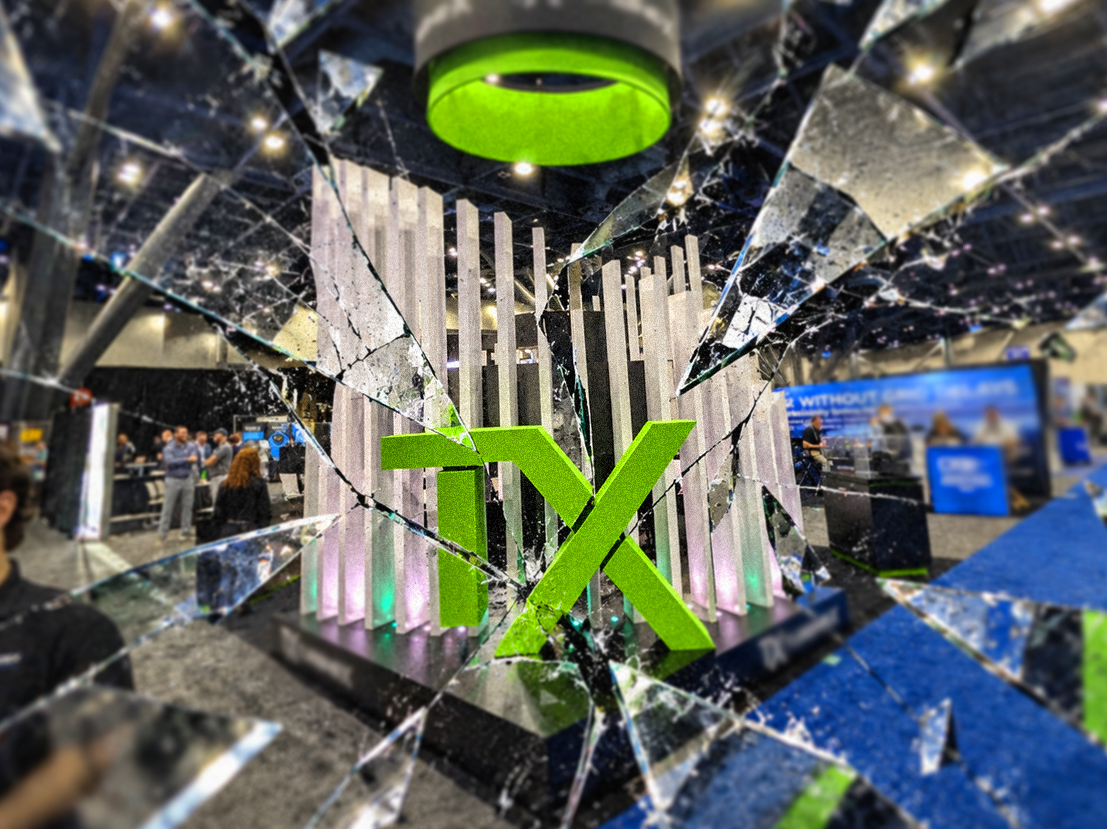
The bigger issue is that more specialized events are competing for fractured pieces of the same audience. Instead of one or two shows becoming major gathering places for an industry, attention gets divided across a growing number of hyper-focused events, fatiguing exhibitors and attendees in the process.
Trade shows can still work very well. It is just becoming harder for every show to generate the kind of gravitational pull for their industry that makes simply showing up worthwhile.
about

We’re a high-quality, all-inclusive graphic design subscription for brands and businesses.
Specialization can improve relevance, but every additional split also pulls buyers, vendors, and attention away from the critical mass a strong show needs.
When Should You Swipe Right?
The Goldilocks Problem
“Quality over quantity” came up several times when I asked exhibitors about how the show was going, and there is truth to it. A company does not need to shake a thousand hands to justify an event. A few conversations with legitimate prospects can easily pay for the booth if even one turns into meaningful business. But quantity still matters. A busy floor simply gives exhibitors more chances to find those conversations, especially when the audience has already been filtered toward their industry.
The challenge is that specialization works a lot like online dating. Being able to filter for exactly what you are looking for sounds ideal because every filter removes people who probably were not a fit anyway, saving you from a disappointingly awkward dinner conversation. Keep narrowing the criteria, though, and eventually you run out of people to swipe on.
Trade shows can do the same thing. A broad industrial event may attract thousands of people, but only a portion will be relevant to any one exhibitor. A highly specialized event improves those odds dramatically. Unfortunately it also shrinks the pool of people who may have attended hoping for a wider range of business opportunities.
Still, even a quiet show can produce something valuable. When attendee traffic is thin, the other exhibitors may become some of the most interesting people in the room. Complementary companies can discover referral relationships, distribution opportunities, joint solutions, shared customers, or connections they would never have made by email. A conversation between two booths can sometimes matter just as much as one with a buyer walking the aisle.
One exhibitor I spoke with said their show had plenty of corporate attendees, but their product appeals to more field-level people who would immediately recognize the problem it solved. “Too many suits and not nearly enough jeans.” Another questioned whether a polished downtown convention center was really the best place to gather a plant-heavy audience when much of the actual industry sat farther down the Gulf Coast.
This is why “quality over quantity” only goes so far as a defense for a low-attendance show. As new niche conferences start establishing a foothold, each one promises a more focused audience while asking the same people to make another trip and exhibitors to fund yet another booth or forego a different event. Eventually, specialization can begin fragmenting the very audience it was supposed to concentrate.
The strongest shows seem to occupy a difficult middle ground: focused enough that people know why they are there, but broad and well-attended enough that the floor creates a range of useful conversations. That is also why I would not be surprised to see more niche events either consolidate permanently or collaborate with related shows on a recurring basis. Two specialized audiences may struggle to create much energy independently, but by combining resources, promotion, and attendees they can build the kind of critical mass that gives a show real industry gravity.
Reaching Critical Mass
The Show Everyone Talked About
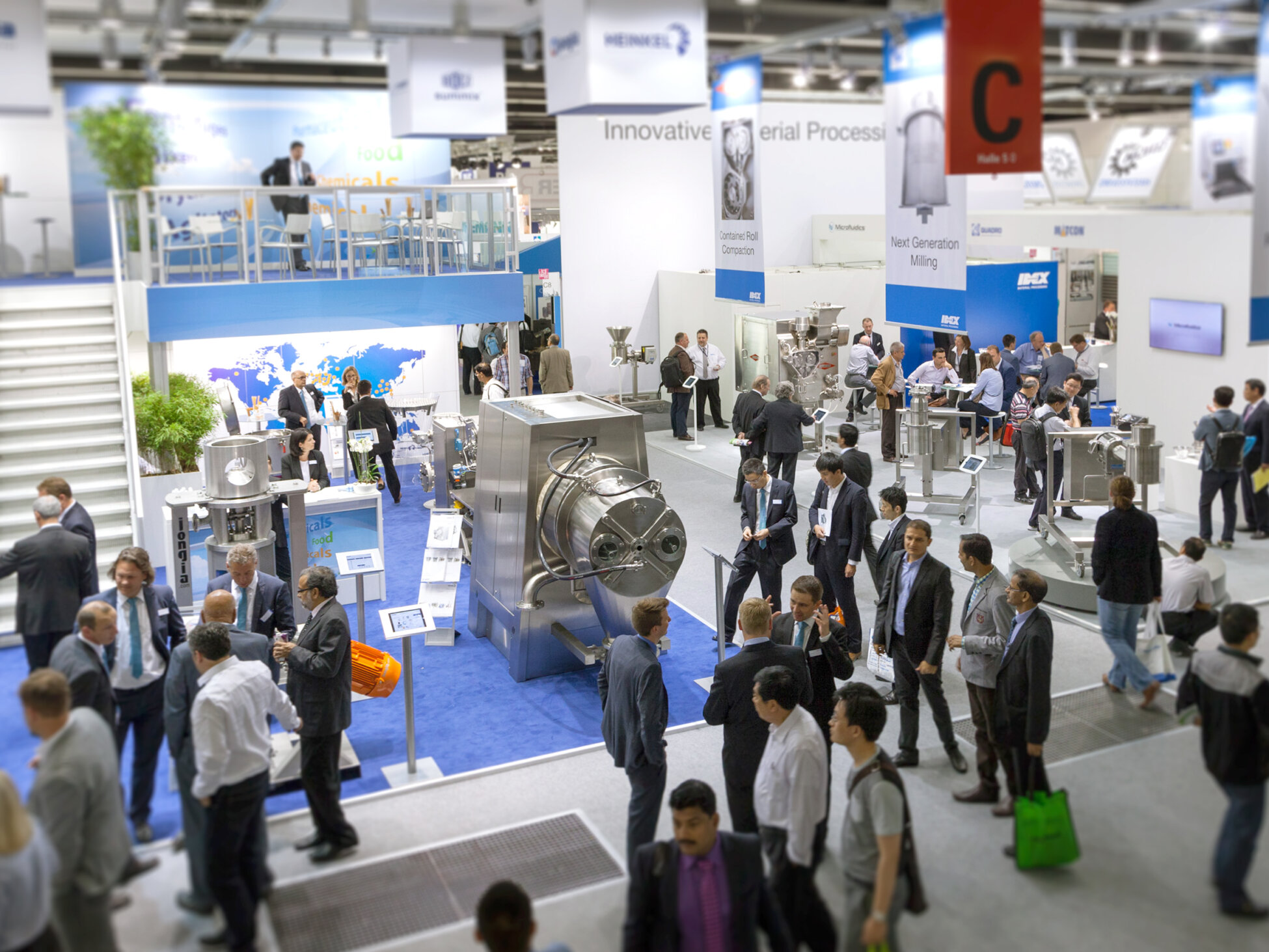
At one of the quieter industrial shows I walked recently, another event kept coming up in conversation: ACHEMA. Exhibitors who had attended it talked about the crowds, the scale, and the sheer number of companies gathered in one place. The 2024 show in Frankfurt reported more than 106,000 participants and 2,800 exhibitors from around the world. Meanwhile, in staggering contrast, I was one of a handful of attendees that were walking the floor of a large convention hall.
When I asked exhibitors whether trade shows still felt worth the effort and expense, the ACHEMA 2024 show kept entering the conversation. It was their industry’s north star. That is what the strongest shows eventually achieve: a kind of near-mythic status. They are no longer merely places where companies exhibit. They become sanctuaries of business potential. Customers go because suppliers will be there. Suppliers go because customers will be there. Both arrive eager to make moves. Competitors, engineers, partners, and technical people all make the same calculation, and each group gives the others another reason to attend. At that point, the show develops its own gravity.
Once an event becomes a key part of how an industry does their business, attending can start to feel less optional and more like an inevitability.
ACHEMA’s three-year schedule probably helps. There is time for anticipation to build, budgets to be planned around it, and companies to treat attendance as something more significant than another event squeezed onto an already crowded calendar. The long gap also creates a degree of scarcity. If you skip it, you have to wait three years for another chance to peacock in front of the whole industry.
Scale creates another advantage. A large, established show gives people, especially those traveling internationally, more reasons to justify the trip. Someone may come looking for a supplier and leave having found a new technology, partner, customer, or solution they had not been actively searching for. That breadth makes the event useful even when every conversation is not perfectly targeted. Just as importantly, its reputation reduces uncertainty. Exhibitors know buyers will be there, buyers know major suppliers will be there, and both can plan around that expectation with far more confidence than they can around a newer event.
The strongest shows create enough concentration that useful conversations can happen in every direction. Once an event reaches critical mass, attendance begins reinforcing itself. People show up because it feels more like a need than a want. They have to be there. Missing it feels like the bigger risk.
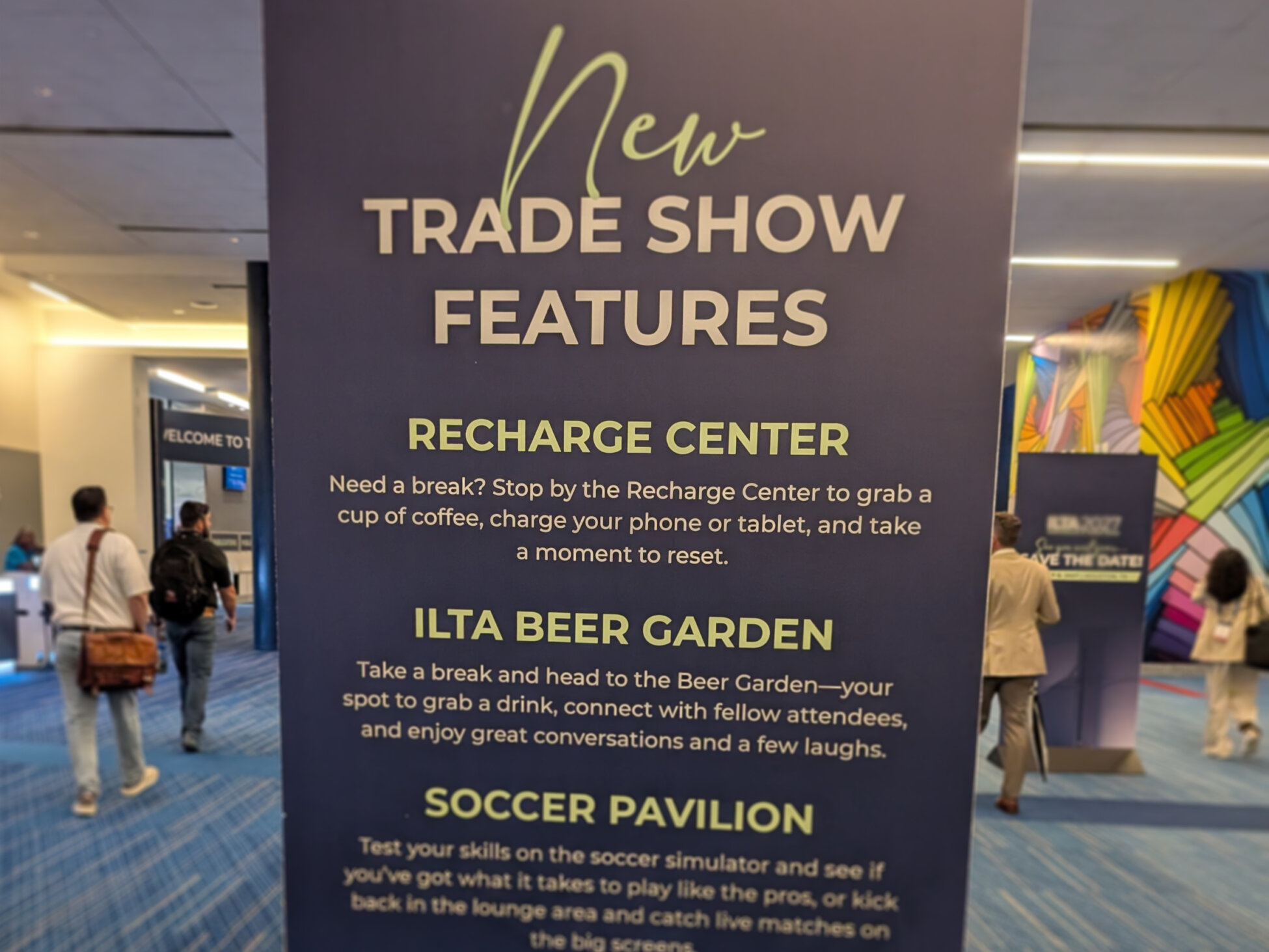
Shows have to market themselves too. The harder attendance becomes to justify, the more important it is to make the overall experience worth choosing.
For What It’s Worth
The Price of Maybe
Some exhibitors felt the trade show industry’s costs are starting to exceed the benefits. Up-front commitments for something that could ultimately flop are an expected part of doing business, but the price tag attached to that uncertainty has become much harder to swallow. At a certain point, it starts to feel less like calculated risk and more like gambling. Companies are paying for floor space, displays, graphics, freight, travel, hotels, setup, staff time, marketing materials, and all the strange little convention-center charges that somehow appear along the way. For companies with long sales cycles, it may then take months or even a year before anyone can confidently trace new business back to a conversation that happened on the floor. That does not make trade shows a bad investment, but it makes “maybe” a much harder answer to accept.
One complaint I heard with surprising intensity was about Wi-Fi access being an additional charge rather than something included with the booth. On its own, that may sound like a relatively small gripe in the context of an expensive event, but the frustration was really about the larger bargain. Exhibitors felt they had already spent heavily to bring their companies, people, and displays into the room. In return, they expected the organizer to bring the audience and provide the basic infrastructure needed to do business once everyone got there. When attendance fell short of expectations, being charged separately for something as fundamental as internet access felt like the bargain was becoming increasingly one-sided.
That same expectation applies to the show itself. An under-attended event can justify its cost when the conversations are excellent, and an expensive show can make perfect sense when it consistently gathers the right market. What becomes difficult to defend is repeatedly spending heavily while hoping enough of the right people happen to walk by. The more uncertain the audience becomes, the more exhibitors are going to scrutinize everything else they are paying for and ask whether the event is really holding up its half of the bargain.
One exhibitor mentioned that some companies, after being disappointed by the cost and return of exhibiting, have started finding ways to participate without buying a booth at all. They still let the trade show do the hard work of bringing the industry into town, but attend instead of exhibit, have conversations throughout the event, and invite the strongest prospects to a smaller, less expensive gathering once the show winds down. A private dinner with an open bar allows them to create a concentrated audience at a fraction of the cost while still benefiting from the show having assembled everyone in the same city. Whether or not this is ethical, it seems to be an economic response to event organizations when booth costs keep rising and the value of any one show feels less certain.
It’s clear that trade shows are not dying, but the fragmented events are under pressure to find a new strategy. Too many overlapping events are asking the same companies to spend more money, travel more often, and gamble on whether the audience will justify the trip. As that pressure increases, organizers have their own value proposition to prove. If exhibitors are expected to keep investing in the room, the show has to give the right people a compelling reason to be in it.
Specialization can improve relevance, but every additional split also pulls buyers, vendors, and attention away from the critical mass a strong show needs.
When Should You Swipe Right?
The Goldilocks Problem
“Quality over quantity” came up several times when I asked exhibitors about how the show was going, and there is truth to it. A company does not need to shake a thousand hands to justify an event. A few conversations with legitimate prospects can easily pay for the booth if even one turns into meaningful business. But quantity still matters. A busy floor simply gives exhibitors more chances to find those conversations, especially when the audience has already been filtered toward their industry.
The challenge is that specialization works a lot like online dating. Being able to filter for exactly what you are looking for sounds ideal because every filter removes people who probably were not a fit anyway, saving you from a disappointingly awkward dinner conversation. Keep narrowing the criteria, though, and eventually you run out of people to swipe on.
Trade shows can do the same thing. A broad industrial event may attract thousands of people, but only a portion will be relevant to any one exhibitor. A highly specialized event improves those odds dramatically. Unfortunately it also shrinks the pool of people who may have attended hoping for a wider range of business opportunities.
Still, even a quiet show can produce something valuable. When attendee traffic is thin, the other exhibitors may become some of the most interesting people in the room. Complementary companies can discover referral relationships, distribution opportunities, joint solutions, shared customers, or connections they would never have made by email. A conversation between two booths can sometimes matter just as much as one with a buyer walking the aisle.
One exhibitor I spoke with said their show had plenty of corporate attendees, but their product appeals to more field-level people who would immediately recognize the problem it solved. “Too many suits and not nearly enough jeans.” Another questioned whether a polished downtown convention center was really the best place to gather a plant-heavy audience when much of the actual industry sat farther down the Gulf Coast.
This is why “quality over quantity” only goes so far as a defense for a low-attendance show. As new niche conferences start establishing a foothold, each one promises a more focused audience while asking the same people to make another trip and exhibitors to fund yet another booth or forego a different event. Eventually, specialization can begin fragmenting the very audience it was supposed to concentrate.
The strongest shows seem to occupy a difficult middle ground: focused enough that people know why they are there, but broad and well-attended enough that the floor creates a range of useful conversations. That is also why I would not be surprised to see more niche events either consolidate permanently or collaborate with related shows on a recurring basis. Two specialized audiences may struggle to create much energy independently, but by combining resources, promotion, and attendees they can build the kind of critical mass that gives a show real industry gravity.
Once an event becomes a key part of how an industry does their business, attending can start to feel less optional and more like an inevitability.
Reaching Critical Mass
The Show Everyone Talked About
At one of the quieter industrial shows I walked recently, another event kept coming up in conversation: ACHEMA. Exhibitors who had attended it talked about the crowds, the scale, and the sheer number of companies gathered in one place. The 2024 show in Frankfurt reported more than 106,000 participants and 2,800 exhibitors from around the world. Meanwhile, in staggering contrast, I was one of a handful of attendees that were walking the floor of a large convention hall.
When I asked exhibitors whether trade shows still felt worth the effort and expense, the ACHEMA 2024 show kept entering the conversation. It was their industry’s north star. That is what the strongest shows eventually achieve: a kind of near-mythic status. They are no longer merely places where companies exhibit. They become sanctuaries of business potential. Customers go because suppliers will be there. Suppliers go because customers will be there. Both arrive eager to make moves. Competitors, engineers, partners, and technical people all make the same calculation, and each group gives the others another reason to attend. At that point, the show develops its own gravity.
ACHEMA’s three-year schedule probably helps. There is time for anticipation to build, budgets to be planned around it, and companies to treat attendance as something more significant than another event squeezed onto an already crowded calendar. The long gap also creates a degree of scarcity. If you skip it, you have to wait three years for another chance to peacock in front of the whole industry.
Scale creates another advantage. A large, established show gives people, especially those traveling internationally, more reasons to justify the trip. Someone may come looking for a supplier and leave having found a new technology, partner, customer, or solution they had not been actively searching for. That breadth makes the event useful even when every conversation is not perfectly targeted. Just as importantly, its reputation reduces uncertainty. Exhibitors know buyers will be there, buyers know major suppliers will be there, and both can plan around that expectation with far more confidence than they can around a newer event.
The strongest shows create enough concentration that useful conversations can happen in every direction. Once an event reaches critical mass, attendance begins reinforcing itself. People show up because it feels more like a need than a want. They have to be there. Missing it feels like the bigger risk.
Shows have to market themselves too. The harder attendance becomes to justify, the more important it is to make the overall experience worth choosing.
For What It’s Worth
The Price of Maybe
Some exhibitors felt the trade show industry’s costs are starting to exceed the benefits. Up-front commitments for something that could ultimately flop are an expected part of doing business, but the price tag attached to that uncertainty has become much harder to swallow. At a certain point, it starts to feel less like calculated risk and more like gambling. Companies are paying for floor space, displays, graphics, freight, travel, hotels, setup, staff time, marketing materials, and all the strange little convention-center charges that somehow appear along the way. For companies with long sales cycles, it may then take months or even a year before anyone can confidently trace new business back to a conversation that happened on the floor. That does not make trade shows a bad investment, but it makes “maybe” a much harder answer to accept.
One complaint I heard with surprising intensity was about Wi-Fi access being an additional charge rather than something included with the booth. On its own, that may sound like a relatively small gripe in the context of an expensive event, but the frustration was really about the larger bargain. Exhibitors felt they had already spent heavily to bring their companies, people, and displays into the room. In return, they expected the organizer to bring the audience and provide the basic infrastructure needed to do business once everyone got there. When attendance fell short of expectations, being charged separately for something as fundamental as internet access felt like the bargain was becoming increasingly one-sided.
That same expectation applies to the show itself. An under-attended event can justify its cost when the conversations are excellent, and an expensive show can make perfect sense when it consistently gathers the right market. What becomes difficult to defend is repeatedly spending heavily while hoping enough of the right people happen to walk by. The more uncertain the audience becomes, the more exhibitors are going to scrutinize everything else they are paying for and ask whether the event is really holding up its half of the bargain.
One exhibitor mentioned that some companies, after being disappointed by the cost and return of exhibiting, have started finding ways to participate without buying a booth at all. They still let the trade show do the hard work of bringing the industry into town, but attend instead of exhibit, have conversations throughout the event, and invite the strongest prospects to a smaller, less expensive gathering once the show winds down. A private dinner with an open bar allows them to create a concentrated audience at a fraction of the cost while still benefiting from the show having assembled everyone in the same city. Whether or not this is ethical, it seems to be an economic response to event organizations when booth costs keep rising and the value of any one show feels less certain.
It’s clear that trade shows are not dying, but the fragmented events are under pressure to find a new strategy. Too many overlapping events are asking the same companies to spend more money, travel more often, and gamble on whether the audience will justify the trip. As that pressure increases, organizers have their own value proposition to prove. If exhibitors are expected to keep investing in the room, the show has to give the right people a compelling reason to be in it.

Matthew A.
Owner of Predi Designs
Matthew began as an online content creator in his teenage years, crafting Flash animations and games for internet audiences and collaborating with other young creatives worldwide. He later graduated cum laude from Texas A&M University’s Visualization Program, where he honed his skills in design, animation, and interactive media. He has owned and operated Predi Designs since 2016.
A Subscription Just Makes Sense.
Predi Designs delivers unlimited high-quality graphic design for a flat monthly rate, making top-tier branding and marketing more affordable, flexible, and efficient than traditional agencies. Plus, without salaries, benefits, or equipment costs, it’s more cost-effective than hiring in-house. No hourly fees, no scope limits. Just fast, reliable design on demand. Scale smarter, save more, and streamline creativity with Predi Designs.
blog tags
related posts
 I have a firm stance when it comes to work-life balance. No marketing project is ever urgent enough to treat someone’s personal life as secondary. That includes mine and it definitely includes the people I work with. Marketing matters, but it is not life and death. I have worked in environments where that line gets blurred. Where everything is labeled urgent, timelines are ignored until the last minute, and the pressure gets passed down to whoever is expected to clean it up. Over time, that kind of workflow does not just hurt the quality of the work, it wears people down. It creates a culture where being available matters more than being effective. That is not something I am interested in building or participating in.
 AutoPay is basically our “keep it boring” button for billing. Your flat monthly rate drafts on the same day every month, you still get an invoice for your records, and nobody has to send the awkward overdue invoice emails. It keeps projects moving, keeps the relationship strong, and keeps your brain on design rather than due dates. Security is handled seriously, mistakes get fixed fast with a 100% guarantee, cancellation is simple, and we even apply a convenience discount as a small thanks for making the whole thing run smoothly.
 For years, I have stumbled a little when someone asks what I do. The easy answer is “graphic designer”. It keeps the conversation moving. It is accurate, but only partially. “Owner” is technically correct too, but that tells you very little about my day to day. I even printed “graphic wizard” on my business cards. It makes people smile, which I still appreciate. It just does not fully answer the question. The hesitation comes from range. There is a wide scope of services, and they do not fit neatly into something I feel comfortable saying in one sentence. When I look at <a href="https://predi-designs.com/how-it-works/#services" target="_blank"> the Predi Designs services list</a>, I see websites, 3D animation, trade show booths, social campaigns, structured documents, presentation decks, and additional technical visuals. That collection works well together, but it does not sit cleanly under a single traditional label. So this post is not about finding something clever. It is about describing the work honestly. What am I actually doing for clients every month?